Jewel Party: Match 3 PVP
- 4.3
- Rating
- 1.00M
- Installs
- Free
- Price
 Analysis by App-foxy
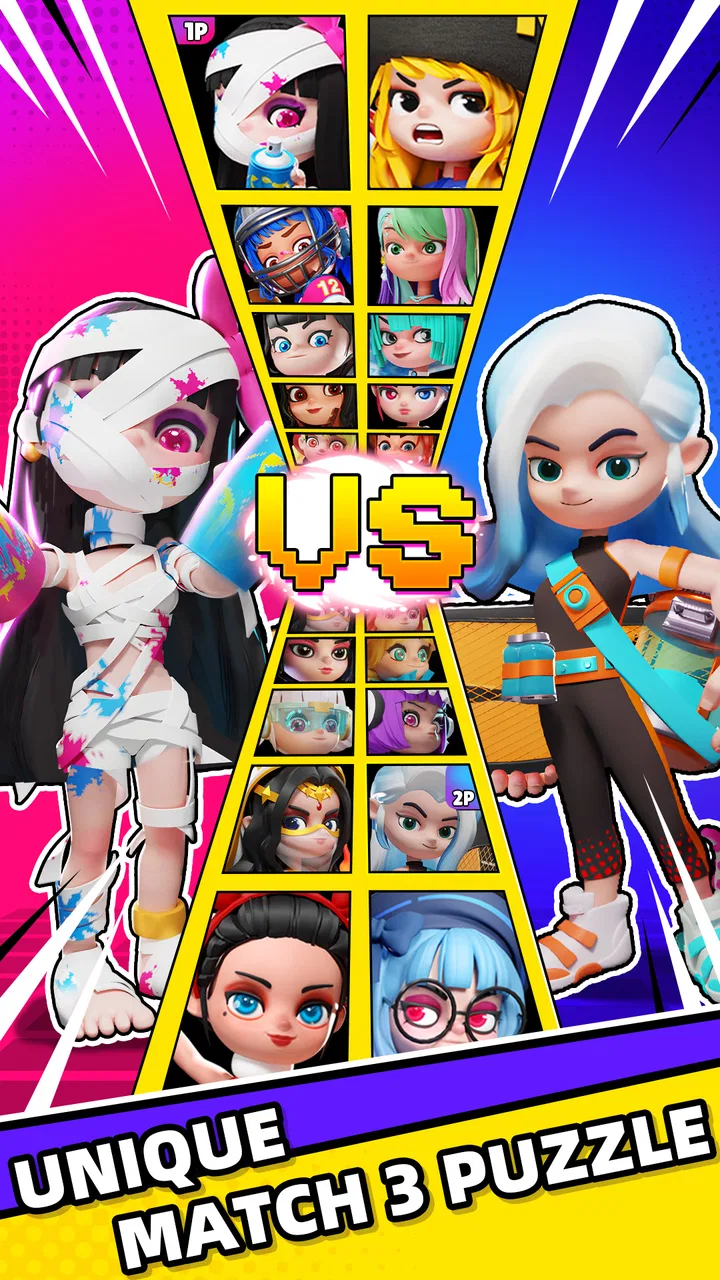
I spent time with Jewel Party: Match 3 PVP as a quick, competitive puzzle game rather than treating it like a long-form strategy title. It is a free casual game from Mentha X Games, built around short match-three contests against other players. The central appeal is easy to understand: make useful matches quickly, keep your board moving, and try to outperform the person on the other side.
That simple idea makes it approachable, but the competitive format changes how the familiar jewel-matching formula feels. In a traditional match-three game, I can pause, think, or walk away whenever I want. Here, the pressure of a live opponent makes every hesitation more noticeable. I found that contrast important when deciding who should install it. It works well for someone who enjoys brief bursts of rivalry, but it is less suitable for anyone looking for a calm puzzle experience with unlimited time.
How the game feels to read and navigate
The board is the main conversation between the game and the player. Colored jewels, possible matches, and the changing arrangement all need to be understood at a glance. I found the basic visual language familiar enough that a player who already knows match-three games can begin without a long learning period. That is a real strength for a casual title: the goal is visible through the board instead of being buried under complicated menus.
You May Also Like

 Blood Strike: 2.5 Anniversary
Blood Strike’s Loadouts Turn Every Drop Into a Tactical Gamble
A close look at Blood Strike’s custom loadouts: how fast access to signature weapons reshapes its battle royale rhythm, rewards preparation, and narrows the gap between fights.

 Pandora - Music & Podcasts
Pandora’s Music Is Easy to Start, but Harder to Recover
Pandora’s strength is its low-effort path from a seed to a station. Its weak spot is how much confidence it asks you to place in connection, setup, and quiet recovery.

 8 Ball Pool
 Is Built on Rivalries, Rematches, and Routine
A close look at the rivalries, rematches, shared routines, and unanswered safety questions that turn a quick pool match into a persistent mobile community.

 Samsung Music
’s Quiet Strength Is Playing What You Already Own
Its reach comes less from spectacle than from dependable access to a personal library. That simplicity is both the app’s strongest retention engine and its ceiling.

 AccuWeather: Weather Radar
AccuWeather Review: A Quick, Clear Forecast for Everyday Decisions
For everyday plans, the best forecast is the one you can understand quickly. AccuWeather makes rain timing, radar, and local conditions easy to act on, with a few trade-offs.

 Hill Climb Racing
Why Hill Climb Racing Still Turns Crashes Into One More Run
A tiny car, a bumpy hill and one more upgrade: Hill Climb Racing keeps resurfacing because its simple chaos makes every near-miss feel personal.
More From Our News Desk



At the same time, competitive speed puts extra weight on visual clarity. In a relaxed puzzle game, I can inspect a crowded board one area at a time. During a player-versus-player round, I have to identify a promising move while also noticing what has changed after the previous action. A small visual distraction can cost more than it would in a single-player alternative. My practical advice is to play a few low-pressure rounds first and learn the board’s rhythm before judging your performance.
Navigation is most comfortable when I treat the game as a focused activity rather than something to operate in the background. I would not recommend switching repeatedly between apps during a match. Even when the rules are straightforward, returning to a moving contest can make the board feel harder to parse. For players who prefer clear, deliberate menus and plenty of time to read every option, the competitive pace may feel less welcoming than a standard offline match-three game.
The game’s store presence also makes its identity clear. It is listed for Everyone, and its casual presentation is a better fit for families and newcomers than a complicated battle game. That age classification helps set expectations about the general audience, although it does not remove the need for an individual player to decide whether fast visual play is comfortable for them.
Learning the board without rushing
I had better results when I stopped trying to scan every jewel equally. I looked first for obvious groups, then checked whether a move would open a useful area rather than immediately taking the first available match. This is especially helpful for players who need a little extra processing time. A deliberate opening routine can reduce the feeling of being overwhelmed, even though the opponent continues to create pressure.
Another useful habit is to keep the screen at a comfortable viewing distance and avoid playing with glare across the display. That is not a special feature of the game, but it matters more here because the board is the whole play space. A bright reflection or dim screen can make similar colors harder to separate, and fast play leaves less time to compensate.
The game has attracted a substantial audience, with over a million installs and an average rating of 4.3 from around 26 thousand ratings. Those figures suggest that the basic concept connects with many players, but they should not be read as proof that every visual style or competitive session will suit every person. My own experience is that the game is easiest to approach when I accept it as a quick reaction-and-planning challenge, not as a leisurely brain teaser.
Motor and sensory demands during a match
The main physical demand is repeated, accurate interaction with the board. Match-three play may look gentle, but a live contest can encourage quick taps or swipes and make mistakes feel costly. Players with limited fine-motor control may find the time pressure more difficult than the matching rules themselves. A slower single-player game would usually offer more opportunity to correct a mis-touch or pause before acting.
I also noticed a trade-off between speed and precision. Moving quickly can help maintain momentum, but hurried input is more likely to select the wrong jewel or miss a better combination. I recommend using a light touch and making each move with a clear target instead of dragging across the board without a plan. That approach will not remove the competitive clock, but it can reduce avoidable errors and make the game feel less physically frantic.
Visual similarity between jewels is another consideration. The game depends on recognizing pieces by appearance, so players who have difficulty distinguishing colors or small shapes may need more time than the format naturally provides. I would not describe the game as a strong choice for someone who requires highly customizable visual presentation. Its appeal comes from immediate board recognition, and that same design can become a barrier when the display is hard to interpret.
Sensory comfort can also vary from one player to another. Competitive games often create a strong sense of urgency through rapid board changes and the need to respond immediately. Even without a complex control scheme, that urgency may be tiring for someone sensitive to visual motion or who prefers predictable pacing. I found it easier to play in short sessions, with a break between rounds, than to treat it as a long uninterrupted activity.
Where the competitive format helps or hurts
Playing against another person gives the familiar jewel formula a clear purpose. I am not simply clearing a board for its own sake; I am making decisions under pressure and trying to improve my timing. That can be motivating for players who lose interest in repetitive solo levels. It also creates a social feeling without requiring the game to become a complicated role-playing or strategy experience.
The same feature can be a disadvantage for players who need flexible pacing. A usual match-three alternative is better when I want to play while tired, during a quiet break, or alongside another task. In those situations, pausing and returning later matters more than competition. Jewel Party is a better fit when I can give the screen my full attention for a short period.
For people with hand fatigue, I would approach the game in brief sessions and avoid chasing a personal best when control starts to deteriorate. The free entry point makes that experimentation easy, but the optional purchase system deserves attention. Items are listed at prices ranging from $0.49 to $99.99 each, so I would keep spending controls in mind, especially on a shared device or when a younger player is using it.
Using it in ordinary situations
I can see myself opening this game while waiting for an appointment or taking a short break when I want something more engaging than scrolling. The important condition is that I would only start a competitive round when I had enough uninterrupted time to focus. If I were standing in a noisy queue, riding in a vehicle, or expecting a call, I would choose a less time-sensitive puzzle instead. A sudden interruption is much more disruptive here than in a turn-based or fully offline game.
It may work well as a shared family activity when everyone understands that the contest is meant to be playful rather than stressful. The Everyone content rating makes the game broadly approachable, and the simple matching concept is easier to explain than a game with many controls. Still, I would supervise purchases on a family device and make sure the player is comfortable with the competitive pressure before assuming it is suitable for them.
For an older player or someone new to mobile games, I would begin by explaining the objective in plain language: look for matching jewels, make a move, and watch how the board changes. I would not start by focusing on winning. The first useful milestone is becoming comfortable with locating a move and touching the intended pieces accurately. Once that feels natural, the player can decide whether the player-versus-player element is enjoyable or merely stressful.
For a player who uses a phone one-handed, the experience may depend heavily on the device and the person’s reach. The board asks for accurate interaction across its visible area, so a smaller handset or a preferred grip could change how comfortable it feels. I would test it with the device held in the usual position rather than assuming that a control layout designed for one person will suit everyone.
The game supports a very specific kind of attention: short, concentrated bursts. That makes it useful for someone who wants a quick challenge but not for someone seeking a background activity. I would not play it while listening closely to a conversation, monitoring children, or doing work that requires frequent glances away from the screen. The game is simple to learn, yet its competitive format rewards presence.
What may still get in the way
The largest barrier is the combination of visual recognition and urgency. A player can understand the rules perfectly and still struggle because the board changes too quickly for comfortable scanning. This is why I would separate “easy to learn” from “easy for everyone to play.” The first is true of the concept; the second depends on vision, motor control, attention, and tolerance for pressure.
Another limitation is that the game does not replace the calm, self-paced feel of classic match-three alternatives. If my priority is relaxation, I would rather choose a puzzle that lets me stop after every move. If my priority is lively competition in a familiar format, this game has the stronger reason to keep playing. The choice is less about which style is universally better and more about whether I want a contest or a quiet diversion at that moment.
In-app purchases are also worth treating as part of the overall experience rather than an afterthought. The game is free to start, which lowers the barrier to trying it, but the available item range includes both very small and very large price points. I would avoid making a purchase just because a match went badly or because I felt pressure to keep pace. Setting a personal limit before playing is a sensible way to keep the casual format from becoming an expensive habit.
The current version is 3.63.0, and it runs on Android 7.0 or later. That gives the game a relatively broad device starting point, but compatibility alone does not guarantee a comfortable experience. Screen size, touch accuracy, brightness, and the player’s preferred interaction style still matter. Before recommending it to someone else, I would ask what phone they use and whether fast visual games normally feel comfortable to them.
Mentha X Games released the title on August 17, 2021, and the continued audience indicates that it has remained visible in the casual-game space. I would still judge it by the present experience rather than by longevity alone. A large player base can make a competitive game feel more worthwhile, but it does not solve the personal issues of visual overload, hand strain, interruptions, or unwanted spending.
My inclusive verdict
I recommend Jewel Party: Match 3 PVP to players who already enjoy match-three games and want their decisions to matter against a live rival. It is familiar enough for newcomers, quick enough for short breaks, and more energetic than a conventional solo jewel puzzle. The free download makes it reasonable to test without committing money, while the Everyone rating makes its general audience clear.
My recommendation becomes more cautious for anyone who needs slow pacing, large and highly customizable visual elements, or a game that can be paused at any moment. Players with color-recognition difficulties, limited touch precision, motion sensitivity, or low tolerance for competitive pressure may find a standard single-player match-three game more comfortable. That is not a criticism of the core idea; it is a reminder that competition changes the accessibility equation.
The best way to try it is to play a few short rounds in a quiet setting, with the display adjusted for comfortable viewing and no need to multitask. Notice whether you can identify pieces without straining, whether quick taps remain accurate, and whether losing feels motivating or irritating. Those answers will tell you more than the store summary can.
Overall, I see this as a focused casual contest rather than an all-purpose puzzle companion. Its strongest quality is the way it turns a familiar matching activity into a direct test of timing and attention. Its weakest point is the same feature: players who need time, flexibility, or reduced sensory pressure may be better served elsewhere. If you want a compact jewel game that asks you to stay engaged and compete, it is worth trying; if you want a peaceful puzzle to dip into whenever life interrupts, I would choose the usual solo alternative instead.
FAQs for Jewel Party: Match 3 PVP
01What is Jewel Party: Match 3 PVP?
Jewel Party: Match 3 PVP is a competitive match-three puzzle game in which you swap colorful jewels to create combinations and score points. Unlike a purely solo puzzle experience, it focuses on player-versus-player competition, so each round is also a race against an opponent. Matches typically reward quick thinking, efficient moves, and the ability to create powerful combos before the timer or turn limit ends.
02How does the PVP mode work in Jewel Party: Match 3 PVP?
The PVP mode places you against another player in a real-time or competitive match, depending on the available game mode and connection conditions. You clear groups of matching jewels to earn points, activate special effects, and try to outperform your opponent. Winning usually depends on more than making matches quickly; planning cascades and using boosters at the right moment can make a major difference.
03Is Jewel Party: Match 3 PVP free to download and play?
Jewel Party: Match 3 PVP can generally be downloaded and played without an upfront purchase, making it easy to try on a compatible Android or iOS device. However, free-to-play games may include optional in-app purchases for boosters, extra resources, cosmetic items, or faster progression. Players should also check whether advertisements, limited lives, or other restrictions are part of the current version.
04Does the game require an internet connection?
Because Jewel Party: Match 3 PVP is built around competitive gameplay, an internet connection is normally important for matchmaking, synchronizing results, and communicating with the game servers. Some puzzle features may remain accessible offline, but online battles, rankings, rewards, and account-related progress may not work correctly without a stable connection. Using Wi-Fi or reliable mobile data can help prevent disconnections.
05Is Jewel Party: Match 3 PVP suitable for casual players?
Yes, the basic match-three mechanics are easy to understand, so casual players can begin making combinations almost immediately. The competitive side becomes more demanding as opponents improve and stages introduce tougher objectives or limited resources. Players who enjoy short sessions, colorful puzzle boards, and leaderboard competition should find it accessible, although those seeking a completely relaxed experience may find the PVP pressure less appealing.
Pros
- Quick matches make it easy to play during short breaks.
- Real-time PvP adds excitement beyond standard match-3 gameplay.
- Simple controls are suitable for both casual and experienced players.
- Power-ups can create satisfying chain reactions and comeback moments.
- Colorful visuals and upbeat effects make matches feel lively.
Cons
- Online competition may feel frustrating when facing more experienced players.
- Progress can become slower without frequent play or resource spending.
- Random tile layouts may sometimes decide matches more than strategy.
- Requires a stable internet connection for PvP battles.
- Repeated match-3 rounds may feel familiar after extended sessions.

Jewel Party: Match 3 PVP
Gallery